





Everything in today’s world is going on with the help of computers and when we talk about computers, operating systems is the first name that comes to our mind. When we talk about the types of operating system with examples, we’re referring to the different ways an operating system is designed to manage hardware, software, and users.
An operating system (OS) is the backbone of any computer or smart device. It helps your system run programs, manage files, and communicate with hardware. Every OS serves a different purpose and is used according to user requirements. Some OS handles one task at a time while others can run multiple operations while assisting multiple users at a single time.
In this guide, we’ll break down everything in simple words so that beginners, students, and tech enthusiasts can understand it clearly.
How Many Types of Operating Systems Are There?
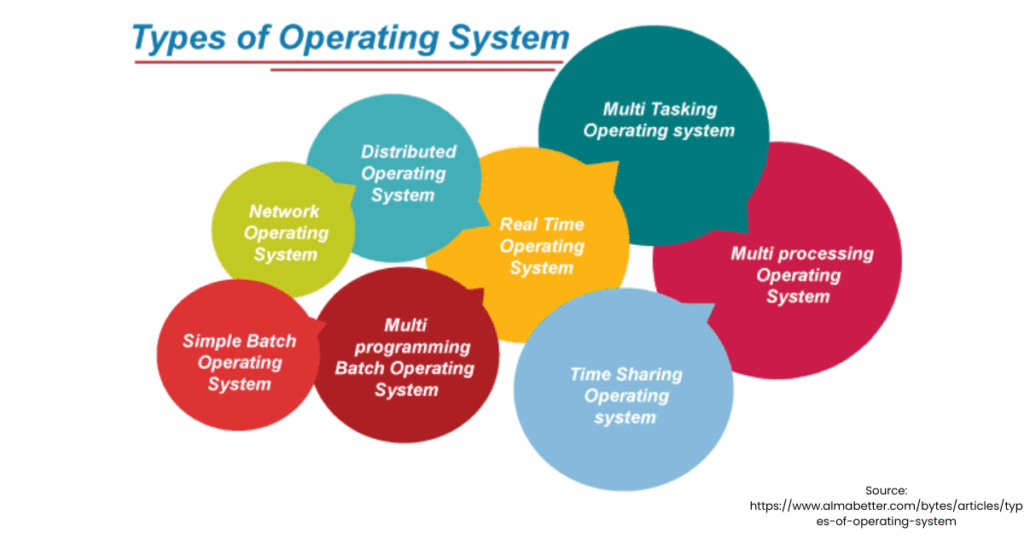
Every student entering the world of data and informatics starts their journey with a common question: how many types of operating system are there?
Well, here comes the catch. Did you know that there is no fixed number for defining the types of operating systems because they can be classified in different ways?
However, in academic and practical contexts, the main types of operating system with examples are generally grouped into the following categories:
- Batch Operating System
- Time-Sharing Operating System
- Multiprogramming Operating System
- Multiprocessing Operating System
- Distributed Operating System
- Network Operating System
- Real-Time Operating System
Let’s start by taking one operating system at a time and exploring the same with examples in detail.
1. Batch Operating System
A batch operating system processes tasks in groups (batches). Users do not interact directly with the system while it is processing the data and instructions given by the user. Instead, tasks are collected over a period of time and then executed together. In early computers, this method was commonly used because it reduced idle time and improved overall system efficiency.
Example: Early mainframe systems used in banks and universities.
Where it is used today: Payroll systems, billing systems, and large data processing tasks.
2. Time-Sharing Operating System
A time-sharing operating system allows numerous users to use system resources at the same time. Each user receives a certain small amount of CPU time. It allows to compartmentalize resources and make it seem like everyone is utilizing the system at the same time.
Example: UNIX systems used in universities and organizations.
Time-sharing systems are common in modern servers and educational institutions.
3. Multiprogramming Operating System
In a multiprogramming operating system, many programs are downloaded into memory simultaneously. To make the most of its resources, the CPU alternates between them. This increases system productivity because the CPU is not inactive.
Example: Linux supports multiprogramming.
4. Multiprocessing Operating System
A multiprocessing operating system uses two or more CPUs to execute programs simultaneously. This type of system improves performance and reliability.
Example: Modern versions of Microsoft Windows and macOS support multiprocessing.
These systems are widely used in business environments and high-performance computing.
5. Distributed Operating System
In a distributed operating system, multiple users are simultaneously working on a single operating system. It gives them the idea that they are working on a single machine, instead every task is distributed across various systems.
Example: Distributed versions of Linux used in cloud computing environments.
This type of system is important for cloud platforms and large-scale applications.
6. Network Operating System
A network operating system manages network resources like files, printers, and user access. It enables numerous computers to connect and share information over a network. Network operating systems are widely used in businesses, schools, and institutions.
Example: Windows Server.
What Is a Real Time Operating System?
Now let’s answer an important question: what is a real time operating system?
A real-time operating system (RTOS) is designed to process data and respond within a fixed time limit. The system must react instantly to inputs.
There are two types of RTOS:
- Hard Real-Time OS (strict deadlines)
- Soft Real-Time OS (flexible deadlines)
Examples:
- VxWorks
- FreeRTOS
- Real-time systems are used in:
- Medical equipment
- Air traffic control systems
- Robotics
- Industrial automation
RTOS is crucial where delay can cause serious problems.
What Is Windows Operating System?
Another frequently asked question is: what is Windows operating system?
According to Keele University, the Windows operating system is a family of operating systems developed by Microsoft. It is one of the most widely used operating systems in the world.
Popular versions include:
- Windows 10
- Windows 11
Features of Windows:
- User-friendly graphical interface
- Strong hardware compatibility
- Wide software support
- Regular security updates
Windows is commonly used in homes, offices, and educational institutions.
Generation of Operating System
Understanding the generation of operating systems helps us see how far technology has evolved.
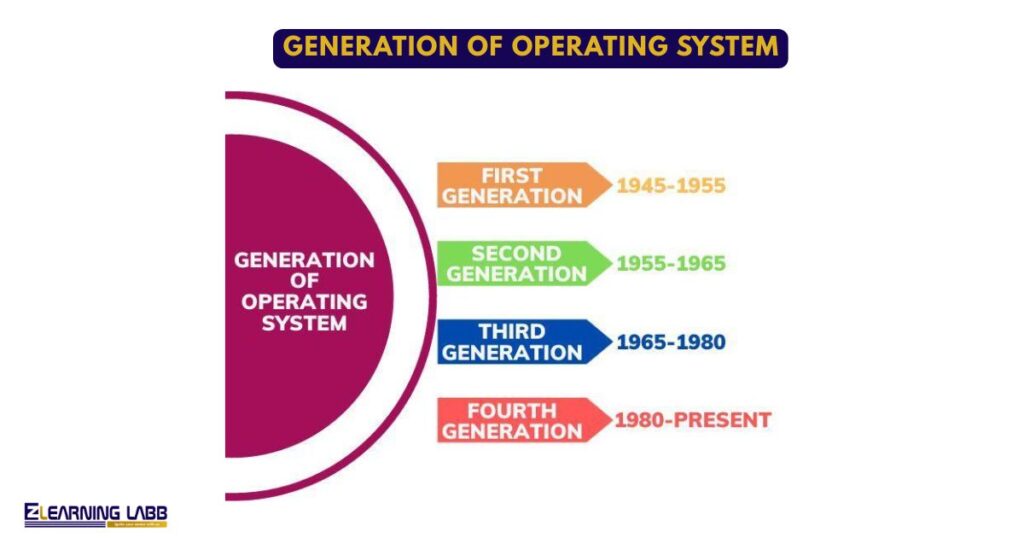
First Generation (1940–1955)
- No operating system
- Programs were entered manually
Second Generation (1955–1965)
- Introduction of batch processing systems
Third Generation (1965–1980)
- Multiprogramming and time-sharing systems
- Development of UNIX
Fourth Generation (1980–Present)
- Personal computer operating systems
- Graphical user interfaces
- Examples: Microsoft Windows, macOS, Linux
Today, operating systems also support cloud computing, virtualization, and artificial intelligence applications.
Why Understanding Types of Operating Systems with Examples Matters?
Many blogs explain the types of operating systems with examples but miss practical relevance. Understanding operating systems is important because:
- It helps in competitive exams (BCA, MCA, B.Tech, government exams)
- It builds a strong foundation for programming
- It improves troubleshooting skills
- It is essential for careers in cybersecurity, cloud computing, and data science
When you clearly understand the types of operating system with examples, you can better choose your career path in IT.
Final Thoughts
Now you not only understand the types of operating system with examples, but you also know what do you mean by operating system, how many types of operating system exist, what is real time operating system, what is Windows operating system, and the generation of operating system.
Operating systems are not just technical concepts—they are the invisible engines that power our digital lives. From smartphones to supercomputers, every device depends on an operating system to function smoothly.
If you’re part of a learning community or planning a tech career, mastering these basics will give you a strong foundation. Keep exploring, stay curious, and remember—every advanced tech skill begins with understanding the basics.
1. What are the main types of operating system with examples?
Some of the main types of operating system are Batch OS, Time-Sharing OS, Multiprogramming OS, Multiprocessing OS, Distributed OS, Network OS, and Real-Time OS. For example, Linux supports multiprogramming, and Windows Server is a network operating system.
2. How many types of operating systems are there?
There is no fixed number because operating systems can be classified in different ways. However, they are commonly grouped into seven major types: Batch, Time-Sharing, Multiprogramming, Multiprocessing, Distributed, Network, and Real-Time operating systems.
3. What is a real-time operating system (RTOS)?
A Real-Time Operating System (RTOS) is designed to process data and respond within a strict time limit. Examples include VxWorks and FreeRTOS, which are widely used in robotics, medical devices, and industrial automation.
4. What is Windows operating system?
The Windows operating system is a family of graphical operating systems developed by Microsoft. Popular versions include Windows 10 and Windows 11. It is widely used in homes, schools, and offices worldwide.
5. Why is understanding operating systems important?
Understanding operating systems builds a strong foundation for programming, cybersecurity, cloud computing, and competitive exams like BCA, MCA, and B.Tech. It also improves troubleshooting skills and helps students choose the right IT career path.