





Business Intelligence vs Data Analytics: Data is everywhere! Businesses, start-ups, governments, and even individuals rely on data to make decisions. But how exactly do organisations turn data into usable information? This is where the debate of business intelligence vs data analytics becomes important.
Many are often confused about the difference between these two terms, how they work, and which one leads to better career opportunities.
In this blog, we will explain what is business intelligence, what is data analytics, their applications, their benefits, and the difference between business intelligence and business analytics. We will also discuss career paths such as business intelligence analyst jobs, business intelligence developer salary, and how enrolling in data analytics courses in India like Zenoffi E-Learning Labb’s programs can help you shape your future in this growing field.
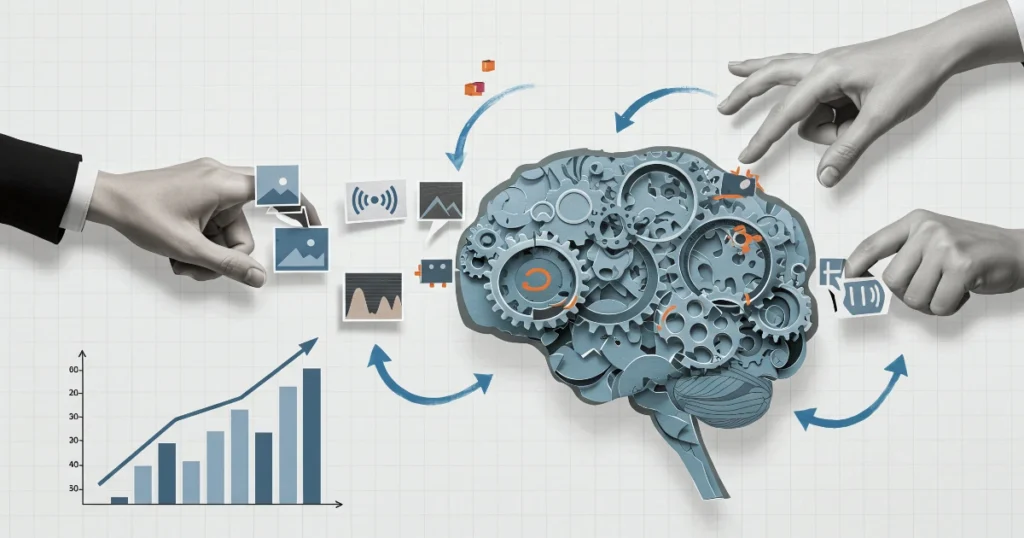
What is Business Intelligence?
Let us start by answering a simple question: what is business intelligence?
Business Intelligence (BI) refers to the use of tools, technologies, and practices that collect, process, and present past and current business data. BI focuses on descriptive analytics and answers questions like:
- What happened?
- How did it happen?
It is largely report-driven and is often used by managers and decision-makers to monitor performance and identify issues. Dashboards, scorecards, and reporting systems are common outputs of BI. A BI system helps organisations keep track of their KPIs (Key Performance Indicators), sales, and operations.
Example: A retail company using BI tools to see which products sold the most in the last quarter and generating a visual sales report for management.
What is Data Analytics?
Now, let’s understand what is data analytics.
Data Analytics (DA) goes a step further than BI. It not only looks at past and current data but also uses predictive and prescriptive models to forecast future outcomes. It answers questions like:
- Why did this happen?
- What will happen next?
- What should we do?
In simple words, data analytics helps in making future-ready decisions by applying statistical and machine learning techniques. This is why a career in data analytics is considered one of the most promising options in today’s digital economy.
Example: The same retail company using DA tools to predict which products will be in high demand next quarter based on seasonal patterns, customer behaviour, and past sales.
Business Intelligence vs Data Analytics
So, the big question is: what is the difference between business intelligence and business analytics?
- Business Intelligence (BI): Focuses on descriptive analytics. It explains what happened and how it happened. It is more about past and present.
- Data Analytics (DA)/Business Analytics (BA): Focuses on predictive and prescriptive analytics. It answers why it happened and what if scenarios. It is future-focused.
A simple way to remember this is:
- BI = Past + Present (Reports, Dashboards)
- DA/BA = Past + Present + Future (Predictions, Recommendations)

Benefits of Business Intelligence
Let’s look at the benefits of business intelligence:
- Provides clear dashboards and reports for decision-making.
- Identifies trends and patterns in past data.
- Helps track performance in real-time.
- Improves efficiency by reducing manual reporting.
- Makes business decisions faster and evidence-based.
Benefits of Data Analytics
Similarly, here are the benefits of data analytics:
- Provides elaborate insights into business problems.
- Predicts future trends and consumer behaviour.
- Helps design better marketing and sales strategies.
- Reduces risks by identifying potential challenges.
- Improves customer experience through personalisation.
Business Intelligence vs Data Analytics in Everyday
Imagine you are driving a car. Business Intelligence is like looking at the rear-view and side mirrors to see what has already happened and where you currently stand. Data Analytics, on the other hand, is like using GPS navigation that not only shows your current location but also predicts traffic conditions and gives you the best route for the future.
This is why companies invest in both. While BI provides the clarity of the past, DA ensures smarter planning for the future.
Read More: Top Tools Used in Data Analytics: A Detailed Guide
BI vs Data Analytics: Career Opportunities
Now, let’s connect this to your career opportunities. Many students ask:
- Are there more business intelligence analyst jobs?
- What is the average business intelligence developer salary in India?
- Or should I go for a career in data analytics?
Business Intelligence Analyst Jobs: BI analysts are in demand across industries like retail, banking, healthcare, and IT. They work with dashboards, SQL queries, and reporting tools.
Business Intelligence Developer Salary: In India, BI developers earn an average salary of ₹6-12 lakhs per year, depending on skills and company. Globally, salaries are much higher.
Career in Data Analytics: With the rise of AI, Big Data, and machine learning, data analytics professionals are among the highest-paid in the industry. This career is not limited to IT companies – even FMCG, healthcare, education, and e-commerce firms are hiring analysts.
Why Choose Data Analytics & Business Analytics at ZELL?
If you are planning to start your career in this field, you must look at data analytics courses in India that are designed for industry needs. Zenoffi E-Learning Labb (ZELL) offers a P.G. Diploma in Data Analytics & Business Analytics. This is a 12-month program designed to take you from beginner to advanced level with structured modules:
- Beginner Modules – Basics of data handling, Excel, SQL.
- Intermediate Modules – Python, data visualisation, predictive analytics.
- Advanced Modules – Machine learning, prescriptive modelling, case studies.
Additionally, ZELL provides Soft Skill Training (2.5 to 3 Hours) to help students become interview-ready. Since ZELL does not have a direct business intelligence course, the P.G. Diploma covers both Data Analytics and Business Analytics, giving you a strong career foundation.

Zenoffi’s Advantage: Data Science and Analytics
Apart from the diploma, ZELL also provides data analytics training under its Data Science and Data Analytics courses. Students who want to pursue data analytics courses in Bangalore or other parts of India can also join online learning programs from ZELL.
By learning with ZELL, you get the dual advantage of:
- Technical knowledge in data handling, analytics, and business modelling.
- Soft skills to present and communicate insights effectively.
Business Intelligence vs Data Analytics: Which Should You Choose?
If you are a student or working professional wondering whether to choose business intelligence vs data analytics, here are a few pointers:
- If you like creating dashboards, generating reports, and working with managers to monitor performance → BI might suit you.
- If you enjoy predicting future trends, working with machine learning, and solving complex problems → DA might be your path.
But remember, both fields overlap. Many professionals start with BI and later move into DA.
As Harvard Business Review once quoted: “Data may well be the raw material of the 21st century, but analytics is the machinery that turns it into insight.”
On A Final Note…
The debate of business intelligence vs data analytics is not about choosing one over the other. Both are essential in today’s business environment. BI helps organisations understand the past and present, while DA helps them prepare for the future.
For students and professionals, the real opportunity lies in learning and mastering data analytics courses. With platforms like Zenoffi E-Learning Labb offering structured programs, you can start your journey today.
As the saying goes, “Without data, you are just another person with an opinion.”
The world is moving towards data-driven decisions – are you ready to be part of it?
Frequently Asked Questions (FAQs)
Q1. What is the difference between business intelligence and business analytics?
Business intelligence focuses on descriptive analytics (past and present), while business analytics focuses on predictive and prescriptive analytics (future).
Q2. What is business intelligence in simple words?
Business intelligence is the process of analysing past and present data to generate reports and dashboards for business decisions.
Q3. What is data analytics and why is it important?
Data analytics uses statistical and machine learning techniques to predict future outcomes and guide strategic decisions.
Q4. What are the benefits of business intelligence and data analytics for companies?
BI improves reporting and monitoring, while DA improves prediction and planning. Together, they help businesses make smarter decisions.
Q5. What is the business intelligence developer salary in India?
BI developers earn around ₹6-12 lakhs per annum depending on skills, experience, and company size.
Q6. Are there business intelligence analyst jobs in India?
Yes, there is high demand for BI analysts across IT, healthcare, banking, and e-commerce sectors.
Q7. Is a career in data analytics better than BI?
It depends on your interest. However, data analytics offers more future-oriented opportunities with machine learning and AI.
Q8. What are some good data analytics courses in India?
ZELL offers a 12-month P.G. Diploma in Data Analytics & Business Analytics with beginner, intermediate, and advanced modules.
Q9. Can I pursue data analytics courses in Bangalore or online?
Yes. ZELL provides online data analytics training, making it accessible across India including Bangalore.
Q10. Why should I choose ZELL for data analytics training?
Because ZELL’s program not only covers technical knowledge but also includes soft skill training, industry case studies, and placement support.